This article is educational and is not a substitute for professional medical advice, diagnosis, or treatment.
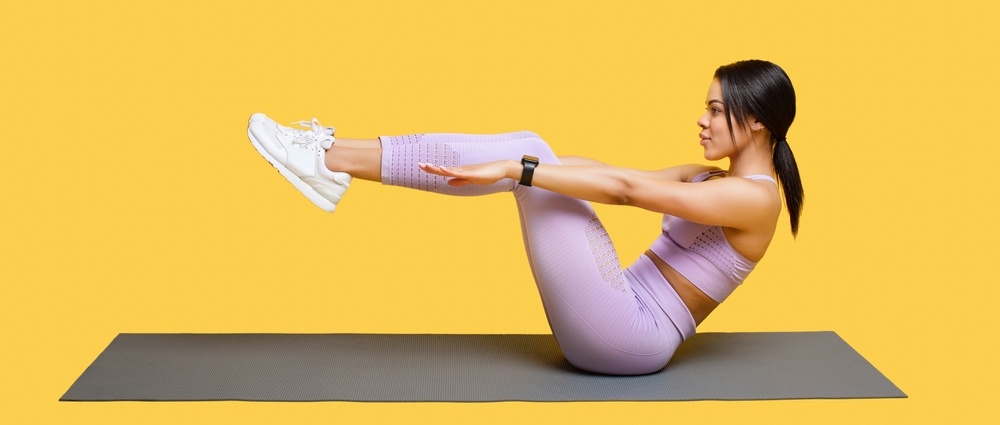
Pilates may feel like a modern fitness trend, but this form of low-impact exercise was developed approximately 100 years ago by a German called Joseph Pilates.
Rebecca Convey, the owner of Kinetic Pilates in North London, explains that Pilates increases strength and flexibility, tones muscle, improves breathing technique, and develops good posture.
“It can help to prevent and aid recovery from injury, and also improves physical performance, ” she says. “Classical Pilates is a holistic, total body workout that requires precision, dedication, and practice.”
Much like yoga, Pilates focuses on the mind-body connection, which Convey says can help you to create an overall healthier lifestyle. In this way, the many benefits of Pilates extend way beyond weight loss, ranging from physical improvements – including better mobility and a stronger pelvic floor – to improved mental health and brain function, such as reduced stress and improved focus.
This is not to say that you can’t use Pilates for weight loss. According to Convey, Pilates, like any exercise, will burn calories that leads to weight loss when practised consistently and coupled with a healthy diet.
Pilates exercises strengthen, lengthen, and tone your entire body. To fuel this process, you use up the stored energy in your fat cells – a process commonly known as ‘burning’ fat. Building muscle tissue mass also increases your resting metabolic rate (RMR) – the rate at which you use up stored energy while you’re inactive.
In this sense, taking up Pilates for weight loss – like other strength exercises – could help you reach a healthier weight. Research1 shows that the more lean muscle mass you have, the more calories you burn in a 24-hour period.
Healthy weight loss, happy mind and body
Pilates is all about achieving better physical and mental health, and feeling and looking good as a result. You should only be using Pilates for weight loss to reach a healthy, realistic weight goal and not a drastic and unsustainable one. This means incorporating regular Pilates workouts into an active lifestyle that’s fuelled by a nutrient-rich, well-balanced diet that fills you up.
Convey says that Pilates will help you look and feel better, which is the best motivator when it comes to achieving and boosting your fitness and weight loss goals. However, she warns that if your current methods leave you feeling unfulfilled, hungry, unmotivated, and unsatisfied, it’s going to be hard to stick to.
“As with all exercise, Pilates will have you tapping into your ‘feel good’ endorphins’,” she says. “When we feel good, we are more likely to continue, and when we continue, we see results. Once we start seeing results, we feel good and the positive cycle continues.”
Pilates weight loss research
It’s worth noting that, as the main benefits of Pilates are strength, flexibility, posture, and stamina, there is less evidence for its impact on weight alone. This said, a 2021 analysis2 of current data found that Pilates can lead to significant weight loss and a decrease in body mass index (BMI) and body fat percentage in people who have overweight or obesity.
While this is not the only group who can adopt Pilates for weight loss, people with overweight or obesity typically need to make bigger lifestyle changes in order to reach a healthy weight and reduce their chance of serious health complications. This can lead to more dramatic weight loss results.
On the other hand, in one study,3Pilates was shown to increase strength but not alter weight in a group of postmenopausal women aged 59 to 66 years. Significantly, the researchers suggested that this was because the participants hadn’t altered their diets. It’s extremely difficult to create a calorie deficit using Pilates for weight loss alone.
A calorie deficit is what happens when you use up more energy – measured in calories – through physical activity and bodily functions than you take in through food. This is the basic science behind weight loss, although there are other important factors when it comes to reaching and maintaining a healthy weight, such as limiting your refined carbohydrate – starchy carbs and sugar – and saturated fat intake.
The most effective way to create a calorie deficit is to adjust what you eat. To aid this, you can also burn calories through exercise. As with all exercise, the number of calories you burn during Pilates will depend on factors such as your sex, your current weight, how often you practise, and whether you participate in beginner, intermediate, or advanced level Pilates.
However, data may serve as a rough guide.
One study4 found that:
-
30 minutes of intermediate-level Pilates burns approximately 180 calories.
-
One hour of intermediate-level Pilates burns around 360 calories.
-
Pilates reformer may burn calories more efficiently than Pilates mat work.
-
To lose weight through Pilates mat work, a person would need to practise either intermediate or advanced level in 45- to 60-minute sessions at least four days per week.
Convey advises that consistent training will lead to a strong Pilates technique, and this will enable you to experience the full benefits of Pilates, including weight loss. To benefit from Pilates for weight loss, most experts recommend practising at least four times a week, or two to three if you’re pressed for time.
If you don’t have the time or budget to attend Pilates classes, the good news is you can practise at home. On the other hand, you may find that Pilates class instructors provide that extra motivation you need to really push yourself. It’s all about finding what works best for you.
To burn calories more efficiently, combine strength training with cardio. You could alternate between Pilates – a form of strength training – and cardio activity such as running or cycling. Cardio burns lots of calories by increasing your heart rate to above 50% of your maximum heart rate capacity.
How does Pilates change your body shape?
Pilates builds your core strength,5 giving you a tighter and more defined stomach, waistline, and hips (your abdominal muscles and obliques) and also buttocks (your glutes). This often results in a flatter tummy and a narrower or more defined waistline.
Pilates lengthens and strengthens muscles in the entire body – as a result, you may notice that your arms and legs become more firm and toned. This can be particularly noticeable in your upper leg muscles (quadriceps) and lower leg muscles (calves). As Pilates improves posture, you might find that you stand taller and become less hunched in your upper back, shoulders, and neck.
Convey says that exercise, such as classical Pilates, is an essential component of a healthy lifestyle.
However, it’s not possible to reap the benefits of Pilates for weight loss if you don’t also implement other healthy lifestyle choices.
These include:
-
Diet – this needs to contain a wide range of nutrients and vitamins, and not contain too much sugar, salt, and saturated fat. For weight loss, it’s also important to follow the UK government-recommended calorie intake for your age and sex.
-
Sleep – getting enough sleep can help to prevent obesity and protect you from a range of other health issues.
-
Substance abuse – limiting your alcohol consumption and quitting or cutting back on smoking can improve your physical fitness and ability to lose weight healthily.
-
Mental health – learning to be kind to yourself and to ask for help when you feel depressed or anxious is essential for good physical health and mental welbeing.

Click Wellness Picks Editorial Team
The Click Wellness Picks editorial team prepares clear, safety-minded wellness education covering everyday health, fitness, nutrition and supplement awareness.